
When to Replace Garage Door Rollers: Warning Signs
Garage door rollers wear out faster than most Ontario homeowners expect, especially with our mix of humid summers, icy winters, and constant temperature swings. The short answer is that garage door rollers usually need replacing every seven to ten years, or sooner if you notice loud noise, visible cracks, wobbling, or a door that suddenly feels heavy to open. Waiting too long puts extra strain on the opener, tracks, and springs, and a garage door hinge and roller repair can quickly turn into a bigger job if it is left unaddressed.
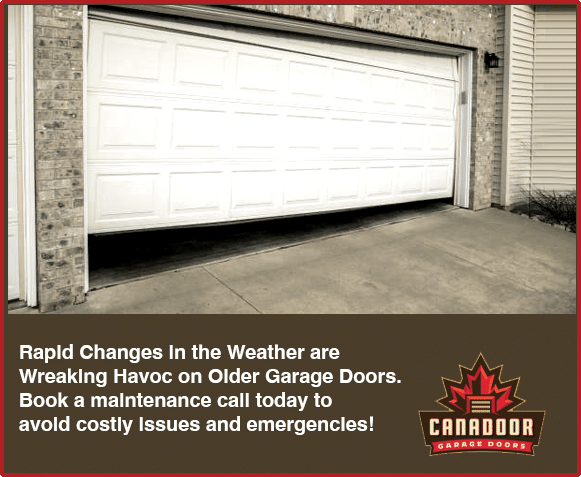
Most homeowners only think about their garage door when something breaks, but rollers tend to give off warning signs well before a full breakdown happens. Below are the clearest warning signs to check for, along with simple steps that can help you catch the problem early and keep the rest of your garage door system running the way it should.
Loud Squeaking or Grinding Sounds During Operation
A quiet, smooth garage door is normal, and a sudden change in sound is one of the first clues that something is wrong. Once you start hearing squeaking, grinding, or rattling every time the door opens or closes, the rollers are usually the reason. This noise means the rollers are worn, dry, or moving unevenly inside the track, and it is often the earliest sign that a garage door repair is on the horizon.
What Noisy Garage Door Rollers Really Mean
- Dry or worn bearings inside the roller often cause a high-pitched squeak
- Grinding sounds can mean that metal is rubbing against metal from a cracked or flattened roller
- Rattling noises may point to loose hardware or a roller that has shifted out of position
- A sudden increase in noise level after months of quiet operation is a sign that the rollers are wearing out
Sound often depends on roller material, so checking your roller type can help explain what you are hearing. Our guide on What Type of Garage Door Rollers Do You Have? breaks down the differences between steel, nylon, and hybrid rollers
Visible Cracks, Chips, or Flat Spots on the Rollers
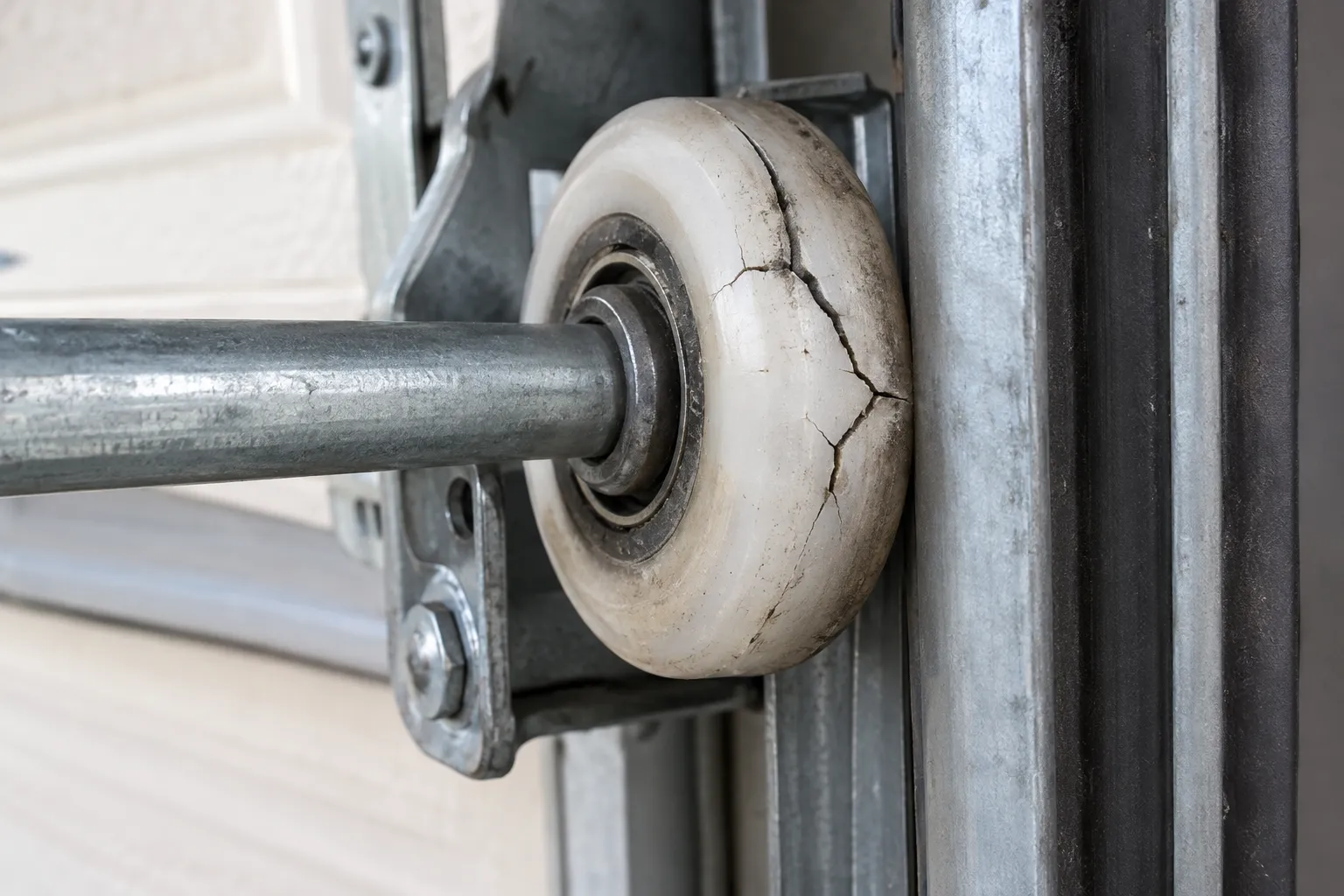
Garage door rollers carry a lot of weight and move constantly, so gradual wear is expected over time. The real problem starts once that wear turns into cracks, chips, or a flat spot that stops the roller from moving smoothly along the track. Catching this early is one of the simplest ways to avoid a bigger repair.
How to Check Garage Door Roller Wear and Tear
- Inspect the roller wheel for cracks, missing chunks, or a flat side instead of a round shape
- Check the stem and bearing area for rust stains or bent metal
- Spin each roller by hand with the door closed to feel for grinding or resistance
- Compare rollers on both sides of the door, since uneven wear often shows on one side first
- Note any roller that feels loose or wobbles on its stem when touched
Your Garage Door Wobbles or Moves Off Track
A garage door that wobbles, jerks, or leans to one side while moving is rarely a minor issue. In most cases, this happens because one or more rollers are damaged and can no longer keep the door lined up inside the track. A door that keeps jumping the track can also put extra strain on the cables and springs.
Garage Door Track Rollers and Alignment Issues
- Watch the bottom corners of the door for side-to-side movement during operation
- Inspect the track for gaps, bends, or spots where a roller keeps slipping out
- Check for a grinding or popping sound right before the door shifts off track
- A door that continues to wobble after small adjustments usually needs new rollers rather than just a track repair
- Uneven wobbling on one side often points to a specific roller rather than a general track problem
The Door Feels Heavy, Slow, or Uneven When Opening
Garage door rollers are supposed to help the door glide with very little effort from the opener or the springs. If the door suddenly feels heavier, opens more slowly than usual, or seems to struggle partway through the cycle, worn rollers are often adding extra resistance. This extra strain can shorten the life of the opener as well.
Signs of Worn Garage Door Rollers Affecting Performance
- Notice if the garage door opener strains, slows down, or makes a different sound than usual
- Check if the door hesitates or stalls at the same spot every time it runs
- Watch for uneven movement, where one side of the door rises faster than the other
- Pay attention if the door feels noticeably heavier to move by hand during a manual test
These issues often start small but tend to get worse quickly, so it helps to understand what causes garage door rollers to fail over time before scheduling a replacement. What Causes Garage Door Rollers to Fail Over Time? covers the most common reasons in detail
Rust, Corrosion, or Missing Roller Pieces
Ontario weather puts extra strain on garage door hardware, from summer humidity to salt and slush tracked in during winter. Steel garage door rollers are especially prone to rust, while nylon or plastic housings can become brittle and crack in extreme cold. A quick seasonal inspection is usually enough to catch this early.
Weather Damage and Steel Garage Door Rollers in Ontario
- Inspect rollers for orange or brown rust spots, especially near the stem and bearing
- Check for missing caps, washers, or hardware that may have loosened over time
- Check for pitting or flaking on steel rollers, which weakens the metal and shortens its lifespan
- Confirm that nylon rollers are not cracked or brittle after a cold winter stretch
The Door and Access Systems Manufacturers Association recommends routine seasonal checks to catch corrosion before it affects the door’s balance and safety, and their DASMA safety tips outline what to check throughout the year
How Often Should You Inspect and Maintain Garage Door Rollers
Regular inspection is the easiest way to avoid a surprise breakdown, and it does not need to be complicated. Most garage door rollers benefit from a quick visual check every few months, with a more detailed inspection at the start of each season, particularly before winter sets in. A little routine, preventive care goes a long way toward extending the life of your rollers, and it also makes it easier to spot small issues before they turn into a full replacement.
Simple Garage Door Roller Maintenance Tips for Every Season
- Inspect rollers, tracks, and hardware every three to four months for early signs of wear
- Apply a small amount of garage door-specific lubricant to the rollers and hinges twice a year
- Keep the tracks clear of dirt, leaves, and ice buildup, especially during Ontario winters
- Test the door balance by disconnecting the opener and moving the door by hand
Angi’s guide on how to inspect and maintain your garage door offers a helpful seasonal checklist for homeowners.
If you are unsure whether a roller needs adjusting or full replacement, our article Should You Replace Garage Door Rollers Yourself? can help you decide the safest next step
Why Worn Rollers Affect More Than Just the Door Itself
Garage door rollers do not work alone. They connect directly to the track, the hinges, and the overall balance of the door, so a problem in one part often creates extra strain somewhere else. Ignoring worn rollers for too long can shorten the life of other components that are more expensive to replace, sometimes leading to a garage door opener repair that could have been avoided.
How Roller Problems Put Stress on Your Garage Door System
- A struggling roller forces the opener motor to work harder with every cycle
- Uneven movement caused by worn rollers can pull the cables and springs out of balance
- Hinges connected to damaged rollers wear out faster due to the added stress
- Tracks can bend or loosen when a roller repeatedly grinds or catches inside them
- Addressing roller issues early is one of the simplest ways to protect the more costly parts of your garage door, since replacing a roller is almost always far less involved than repairing a spring, cable, or opener motor that failed under added strain
Keep Your Garage Door Rolling Smoothly All Year

Catching these warning signs early can save you from a bigger repair down the road and keep your garage door safer for daily use. A little routine inspection, paired with knowing what to check for, goes a long way toward extending the life of your rollers and the rest of your garage door system. Most roller problems are easy to catch once you know what sounds and movements to pay attention to, and acting on them early almost always costs less than waiting for a full breakdown.
If your garage door is showing any of these signs, Canadoor Garage Doors is ready to help Ontario homeowners inspect, maintain, and repair garage door rollers with honest, professional service. Our team understands how local weather affects garage door hardware throughout the year, and we take the time to explain what your door actually needs before any work begins. Contact us or give us a call to book an inspection and get your garage door moving smoothly again.
Frequently Asked Questions
Can I replace just one roller instead of the whole set?
Yes, but many professionals recommend replacing rollers in pairs or as a full set so the door moves evenly on both sides and wears down at the same rate.
Is a noisy garage door always a roller problem?
Not always. Noise can also come from hinges, springs, or the opener, but worn rollers are one of the most common causes of a sudden change in sound.
What is the difference between nylon and steel garage door rollers?
Nylon rollers run quieter and need less lubricant, while steel rollers tend to be more durable but noisier over time and more prone to rust.
Can cold Ontario winters damage garage door rollers?
Yes. Freezing temperatures can make nylon rollers brittle and cause steel rollers to rust from moisture and road salt tracked into the garage.
How do I know if my garage door roller is out of the track?
You may notice a loud pop, sudden wobbling, or the door getting stuck partway through its cycle instead of moving smoothly to the top or bottom.
Does a heavy garage door mean the rollers are bad?
It can. Worn rollers create extra resistance, which often makes the door feel heavier by hand and puts more strain on the opener over time.
Can I inspect my garage door rollers myself?
Yes, a visual inspection is simple and safe to do from the ground, but repairs involving the springs or track should be left to a professional.
How often should garage door rollers be lubricated?
A light coat of garage door lubricant every few months is usually enough to keep rollers moving smoothly and reduce unnecessary noise.
What happens if I wait too long to replace worn rollers?
Delaying replacement can lead to a door that jumps the track, extra wear on the opener, and a higher chance of an unexpected breakdown during daily use.