
Why Your Garage Door Freezes Shut in Winter
Winter in Canada brings freezing temperatures, snow, ice, and constant freeze-thaw cycles. While most homeowners expect icy driveways and snow-covered roofs, many are caught off guard when their garage door refuses to open on a cold morning.
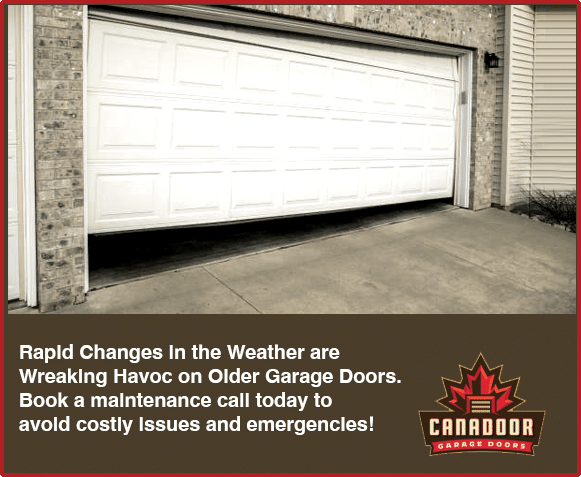
A frozen garage door is more than just an inconvenience. It can lead to damaged seals, strained openers, broken components, and costly repairs if handled incorrectly. Understanding why your garage door freezes shut and how to prevent it can save you time, money, and frustration all winter long.
Why Garage Doors Freeze Shut
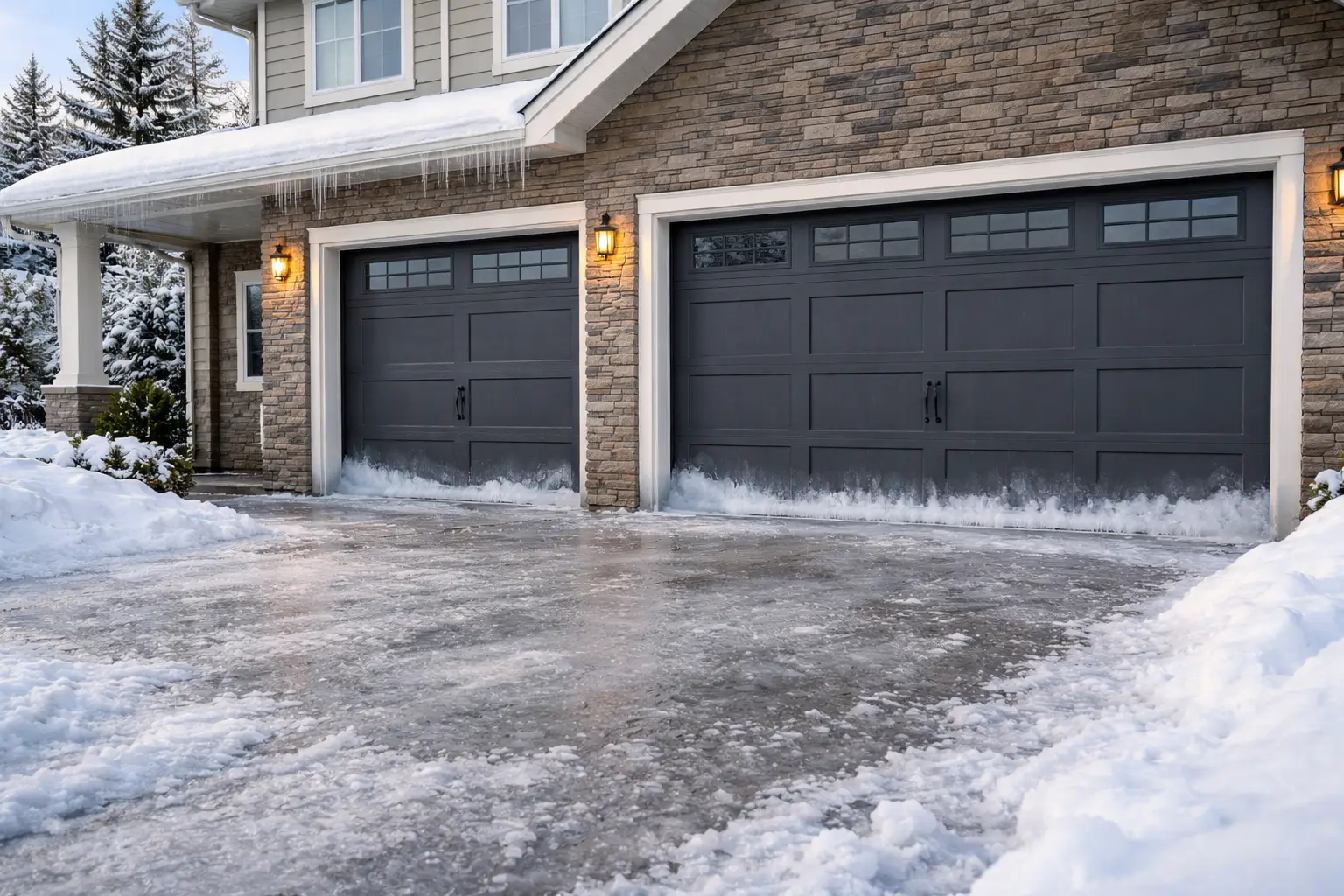
Garage doors typically freeze at the bottom where the rubber seal meets the ground. Moisture from melting snow, slush, or rain collects along the base of the door. When temperatures drop overnight, that moisture turns into ice, effectively bonding the door to the ground.
This issue is especially common during freeze-thaw cycles, where daytime melting is followed by nighttime freezing.
Several factors contribute to the problem:
-
Water pooling near the garage threshold
-
Worn or cracked bottom seals
-
Uneven or poorly sloped driveways
-
Poor drainage around the garage
-
Lack of insulation or weather protection
Even a thin layer of ice can prevent your garage door from opening properly.
The Risks of Forcing a Frozen Door Open
When a garage door is stuck, many homeowners instinctively try to force it open using the automatic opener or manual lifting.
This can lead to serious damage, including:
-
Stripped gears in the opener
-
Burned-out motor
-
Bent tracks or panels
-
Torn weather seals
-
Broken springs or cables
Garage door systems are designed to move smoothly. When resistance is introduced, the entire system is put under stress.
If your door does not open easily, it is a sign that something is wrong. Forcing it will usually make the problem worse.
How to Safely Free a Frozen Garage Door
If your garage door is frozen shut, the goal is to break the ice bond without damaging the system.
Here are safe ways to do it:
Apply gentle heat
Use warm (not boiling) water along the base of the door to melt the ice. A hair dryer or heat gun on a low setting can also help loosen the seal.
Use de-icing products
Apply a driveway-safe de-icer along the base of the door. Avoid harsh chemicals that could damage concrete or rubber seals.
Gently loosen the seal
Carefully use a plastic shovel or similar tool to break up ice along the bottom edge. Avoid metal tools that can damage the door or seal.
Dry the area afterward
Once the door opens, remove any remaining water to prevent it from refreezing later.
Preventing Your Garage Door from Freezing
The best way to deal with a frozen garage door is to prevent it from happening in the first place. A few simple steps can make a big difference.
Keep the Area Dry
Moisture is the root cause of freezing. After snowfall or rain, clear away slush and standing water from the base of your garage door.
Shoveling and sweeping regularly reduces the chance of ice forming overnight.
Improve Drainage
If water consistently pools near your garage, drainage may be the issue.
Consider:
-
Adjusting driveway slope
-
Installing a trench drain
-
Clearing nearby gutters and downspouts
Proper drainage keeps water away from the door and reduces freezing risk.
Replace Worn Weather Seals
The bottom seal plays a key role in preventing moisture from entering and freezing.
Over time, seals can:
-
Crack
-
Flatten
-
Lose flexibility
Replacing a worn seal creates a tighter barrier and reduces water infiltration.
Apply a Protective Barrier
Applying a silicone-based lubricant or weatherproof spray to the bottom seal can help prevent ice from sticking.
This creates a thin barrier between the rubber and the ground, making it harder for ice to bond.
Avoid petroleum-based products, as they can damage rubber over time.
Insulate Your Garage Door
Insulated garage doors help regulate temperature differences between the inside and outside of your garage.
While insulation alone will not prevent freezing, it reduces condensation and temperature fluctuations that contribute to ice buildup.
Open and Close Your Door Periodically
If your garage door remains closed for long periods during winter, ice has more time to form.
Opening and closing the door periodically helps break up any developing ice and prevents it from bonding strongly to the ground.
When to Call a Professional
Sometimes, a frozen garage door leads to damage that requires professional attention.
Call a technician if you notice:
-
The door is uneven when opening
-
The opener struggles or makes unusual noises
-
The door will not fully close or seal properly
-
Visible damage to tracks, springs, or panels
A professional inspection ensures that no hidden damage has occurred and that your system is safe to operate.
Long-Term Winter Protection
For homeowners dealing with frequent freezing issues, upgrading your garage door system may be worth considering.
Modern garage doors offer:
-
Better insulation
-
Improved sealing systems
-
More durable materials
-
Smoother operation in cold weather
In harsh climates, investing in a high-quality door can reduce winter-related problems and improve year-round performance.
A frozen garage door is a common winter issue, but it is also preventable. Understanding how moisture, temperature, and door condition interact allows you to take simple steps to protect your system.
Avoid forcing the door open, address moisture buildup, and maintain your seals and components regularly.
With the right approach, you can keep your garage door operating smoothly all winter long and avoid unnecessary repairs when temperatures drop.