
How Often Should You Get a Professional Garage Door Inspection? 3 Manufacturer Guidelines to Follow
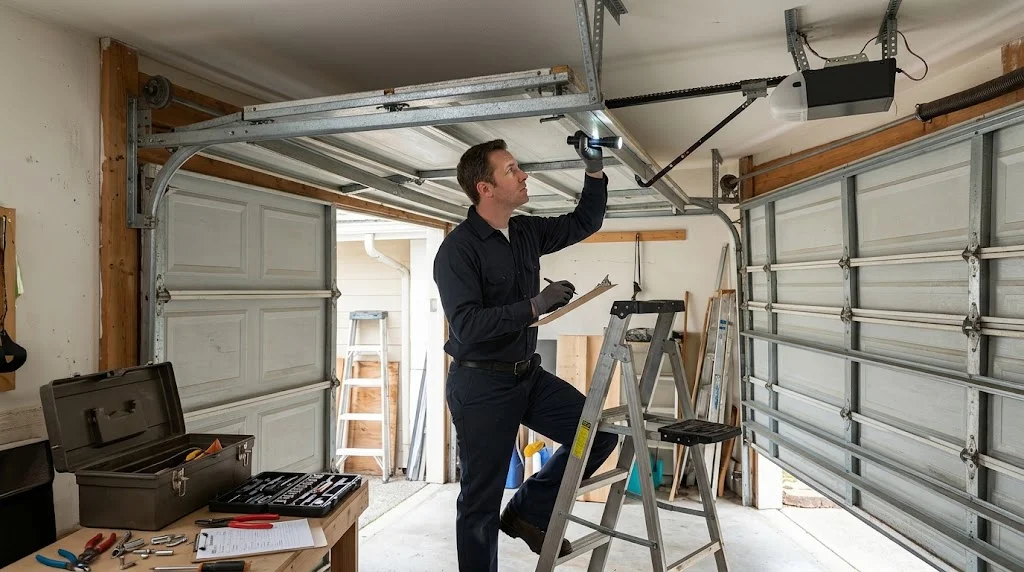
Most garage door and opener manufacturers recommend a professional inspection once a year, alongside monthly checks homeowners can do themselves between visits. These aren’t arbitrary numbers; they come from the same organizations that engineer the springs, openers, and safety systems in the first place, which is worth knowing before deciding how often to actually book service.
Manufacturer guidelines exist for a reason: they’re based on how the components are engineered to perform over their expected lifespan, not on guesswork. Springs are rated for a certain number of open-close cycles, openers are calibrated with specific force and safety tolerances, and hardware is designed to be inspected at intervals that catch wear before it becomes failure. Following these guidelines consistently is one of the more reliable ways to keep a garage door repair small rather than letting it grow into something bigger, and it removes a lot of the guesswork homeowners otherwise face when deciding whether something can wait.
Key Takeaways
- An annual professional inspection is the standard baseline across most manufacturer guidelines.
- Manufacturers also recommend monthly homeowner checks between professional visits, not as a replacement for them.
- Skipping these guidelines can affect both safety and, in some cases, warranty coverage.
- The specific tasks fall into a clear split: some are safe for homeowners, others genuinely require a trained technician.
What Each Guideline Actually Covers
| Task | Performed By | Frequency | Why It Matters |
| Full professional inspection | Trained technician | Annually | Catches wear that isn’t visible or audible yet |
| Visual and functional checks | Homeowner | Monthly | Flags obvious problems between professional visits |
| Lubrication of hinges, rollers, tracks | Homeowner | Every 6 months | Reduces strain on the opener and hardware |
Read more about the broader signs it’s time for service, not just what manufacturers specifically recommend, in How Often Should Garage Doors Be Serviced? 5 Signs It’s Time for a Tune-Up.
1. Manufacturers Recommend an Annual Professional Inspection
Garage door and opener manufacturers consistently point to an annual visit from a trained technician as the standard recommendation for a typical residential garage door, separate from anything a homeowner can reasonably do alone.
Why Manufacturer Guidelines Point to a Yearly Technician Visit
This covers the parts of the system that require real expertise to evaluate safely.
- Spring tension and balance, checked and adjusted by a trained technician
- Cable condition and hardware wear, inspected up close
- Opener force settings and safety reverse mechanisms, tested properly
- Overall alignment of tracks and rollers
This guideline holds regardless of how the door looks or sounds day to day, since some wear isn’t visible or audible until it’s more advanced. Spring fatigue, for example, can develop gradually over years of normal use without producing any noise or visible change, right up until the point of failure. That’s part of why the annual interval exists as a fixed recommendation rather than something homeowners are expected to judge purely on symptoms.
Call a pro if: it’s been over a year since your last professional inspection, even if nothing seems obviously wrong.
For a look at what happens if a door goes without this kind of attention entirely, read What Happens If You Skip Garage Door Maintenance? 4 Costly Problems to Expect.
2. Manufacturers Also Specify Monthly Homeowner Checks
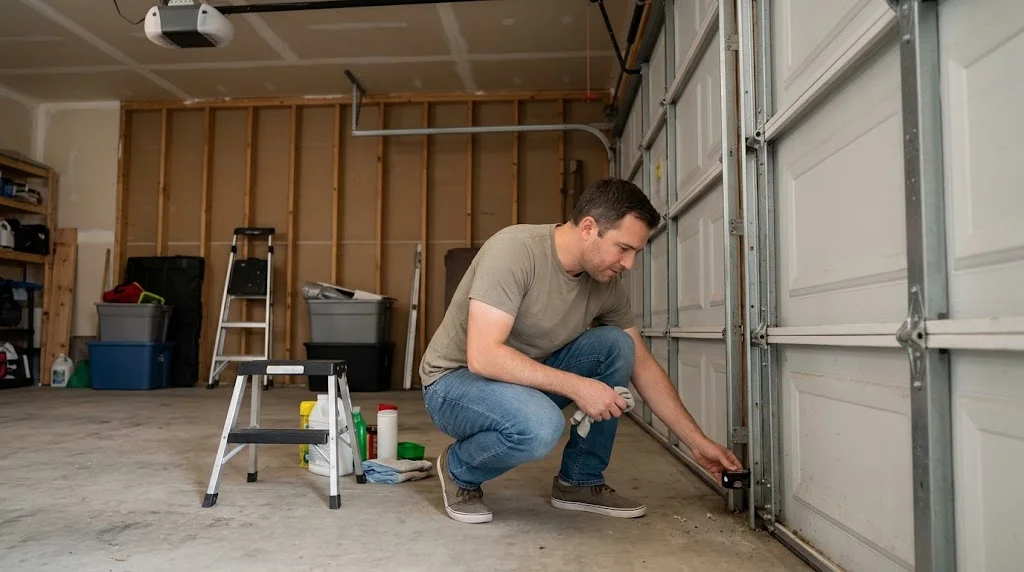
Alongside the yearly professional visit, manufacturer guidelines typically include a set of simple monthly checks homeowners can perform without special tools or training.
What Manufacturer Guidelines Say Homeowners Can Safely Check Themselves
These aren’t a substitute for professional service; they’re meant to catch obvious problems between visits, functioning more like a smoke detector test than a full inspection.
- A visual check of springs, cables, rollers, and hinges for wear or damage
- A manual balance test, disconnecting the opener and lifting the door by hand
- A reversing mechanism test, checking that the door reverses when it meets an obstruction
- A photo eye test, confirming the safety sensors are working correctly
For where exactly this line falls between what’s reasonable to check yourself and what needs a professional, read DIY Garage Door Checks vs. Professional Service: How Often Should You Do Each? 3 Key Differences. Most homeowners can comfortably complete the full monthly routine in under ten minutes, and it requires nothing beyond a step stool and a bit of attention, which makes it one of the easiest habits to actually maintain over the long run.
Call a pro if: any of these monthly checks turn up something unusual, rather than attempting to fix it yourself. The International Door Association’s safety and maintenance guidance recommends these exact monthly checks, along with lubricating hinges, rollers, and tracks roughly twice a year, and is clear that anything beyond a basic visual or functional check should go to a trained technician.
3. Skipping These Guidelines Can Affect Safety and Warranty
Manufacturer guidelines aren’t just a suggestion for keeping the door running smoothly. They’re often tied directly to warranty terms and, more importantly, to safety, and the stakes tend to be higher for a heavily cycled commercial garage door than for a lightly used residential one.
Why Ignoring Manufacturer Service Intervals Carries More Than One Risk
Some manufacturers specify that certain warranty coverage depends on documented, regular service, and safety features like automatic reversing mechanisms are only reliable if they’re actually tested on schedule. This is one of the more overlooked aspects of garage door ownership, since most homeowners think of maintenance purely in terms of convenience rather than as something with real safety and financial stakes attached. It’s easy to assume a door is fine simply because it still opens and closes, but that assumption is exactly what these guidelines exist to challenge.
- Some warranties require proof of regular professional service to remain valid
- Safety mechanisms like auto-reverse and photo eyes need periodic testing to confirm they still work
- Small wear issues caught early are consistently cheaper to fix than the failures they eventually cause
- A door that’s out of adjustment places more strain on the opener over time, shortening its lifespan too
Following the manufacturer’s actual schedule, rather than a general rule of thumb, is the most reliable way to avoid both categories of risk at once. It’s a low-effort trade, since checking a manual or asking a technician costs nothing, while the downside of guessing wrong can mean a voided warranty claim or a safety mechanism that fails when it’s actually needed.
Call a pro if: you’re not sure whether your current door or opener has specific manufacturer requirements. Checking your owner’s manual, or asking a technician to look it up, takes only a few minutes. DASMA’s safety guidance for garage door systems specifically recommends an annual visit from a trained door systems technician in addition to the monthly checks homeowners can do themselves, reinforcing that this isn’t a single manufacturer’s opinion but a shared industry standard.
Manufacturer Guidelines Are a Baseline, Not a Ceiling
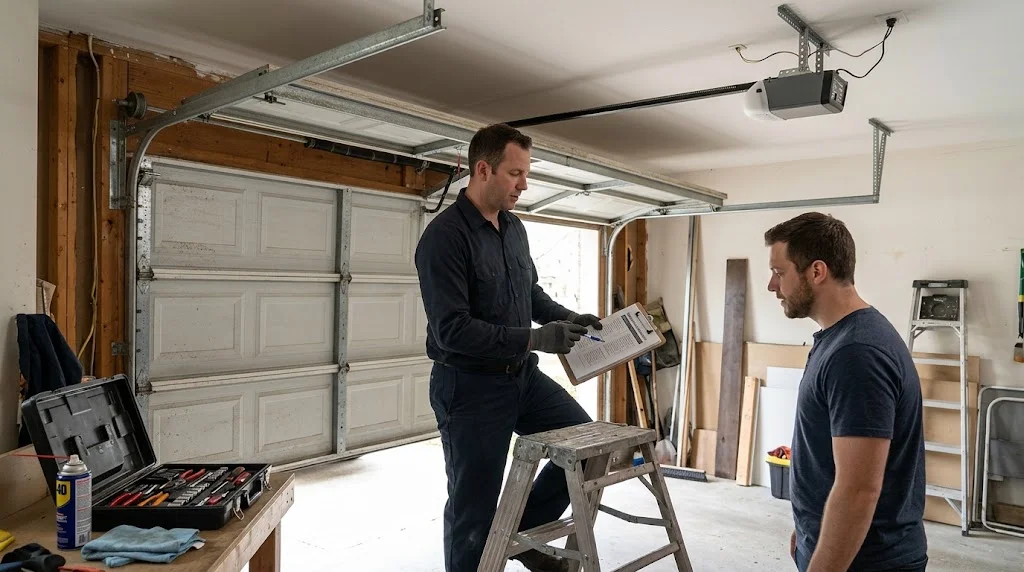
Following the manufacturer’s actual recommended schedule, an annual professional visit plus monthly self-checks covers the large majority of cases without over- or under-servicing the door. Doors used more heavily, or showing any of the signs covered elsewhere, may reasonably need attention sooner than the standard interval.
Manufacturers set these baselines from engineering data and real-world testing, not from an interest in selling more service visits than necessary, which is exactly why they’re worth taking seriously rather than treating as optional. At Canadoor Garage Doors, a standard annual visit is built directly around these manufacturer guidelines. Contact us or give us a call to get your door on a proper schedule.
Frequently Asked Questions
What happens during a typical annual manufacturer-recommended inspection?
A technician usually checks spring tension and balance, inspects cables and hardware for wear, tests the opener's force settings and safety reverse features, and confirms tracks and rollers are properly aligned. Ask your service provider to walk through exactly what's included in their standard visit, since coverage can vary between companies.
Can I skip the monthly homeowner checks if I get an annual professional inspection?
It's not recommended. The monthly checks are designed to catch obvious problems between professional visits, and skipping them means issues could go unnoticed for up to a year instead of a month, which is a meaningful gap for something like a misaligned safety sensor.
Is it dangerous to perform the monthly checks myself?
The recommended monthly checks, visual inspection, balance test, reversing test, and photo eye test, are designed to be safe for homeowners without special tools. Anything involving springs, cables, or internal opener components should be left to a professional, since those carry real injury risk.
Does skipping manufacturer guidelines actually void my warranty?
It depends on the manufacturer and the specific warranty terms. Some do require documented regular service to maintain coverage, so it's worth checking your specific warranty document rather than assuming either way, particularly for a newer door still under coverage.
How do I know if my garage door's safety reverse feature is actually manufacturer-compliant?
Openers manufactured after 1993 are required by federal regulation to include a safety reversing feature, such as photo eyes near the floor. If your opener doesn't have this, it's worth discussing a replacement with a technician regardless of its age, since this is a genuine safety gap rather than a minor inconvenience.
What's the risk of following a general schedule instead of my specific manufacturer's guidelines?
General schedules are a reasonable starting point, but your specific door and opener may have particular requirements, especially around warranty terms, that a generic timeline won't capture. When in doubt, the manual or the manufacturer's website settles the question directly.
Should I follow manufacturer guidelines even for an older garage door with no remaining warranty?
Yes. Even without warranty considerations, the safety and performance reasons behind the guidelines still apply. An older door arguably benefits even more from consistent attention, since components have already accumulated more wear than a newer system.
Are manufacturer guidelines different for commercial garage doors?
Often, yes. Commercial doors typically cycle far more often than residential ones, so many manufacturers recommend more frequent professional service intervals for commercial applications specifically, sometimes as often as every few months depending on usage.
Where can I find my specific garage door manufacturer's recommended schedule?
Check the owner's manual that came with your door or opener, or the manufacturer's official website. A trained technician can also often look this up for you if the manual isn't available, based on the door's model and serial information.