
What Happens If You Skip Garage Door Maintenance? 4 Costly Problems to Expect
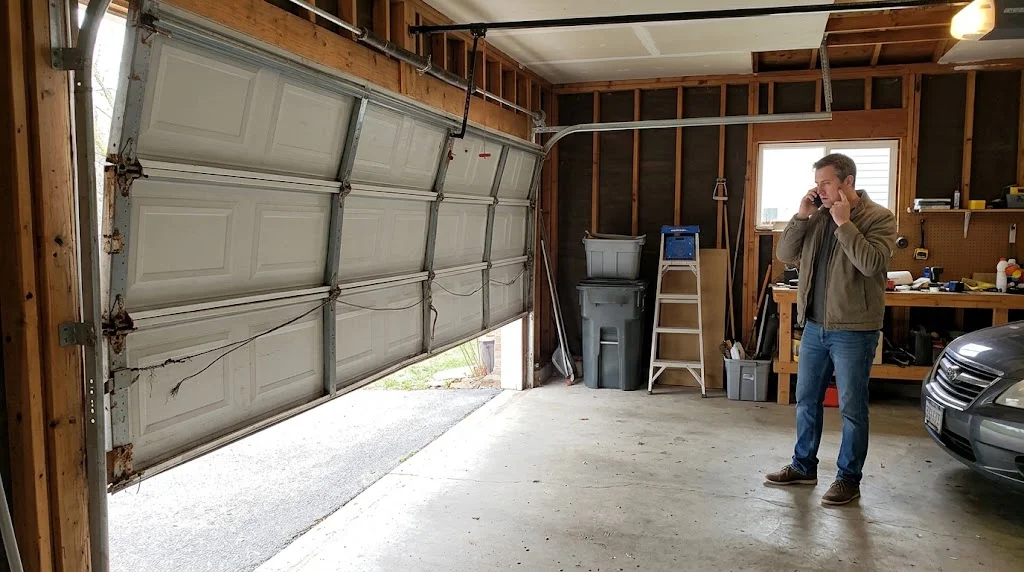
Skipping garage door maintenance tends to lead to four predictable problems: a door that’s less secure and reliable, rising energy bills, small issues turning into expensive repairs, and a real increase in safety risk to your household. None of these happen overnight; they build gradually, which is exactly why neglect is easy to fall into and hard to notice until it’s already costing you.
A garage door left alone doesn’t fail all at once. Small amounts of wear compound quietly over months or years, and by the time a problem becomes obvious, it’s often further along than a homeowner would expect. Springs lose tension gradually, seals degrade a little more with every seasonal swing, and hardware loosens by fractions of a millimeter at a time, none of which announces itself the way a sudden breakdown would. Understanding what’s actually at stake makes it easier to justify the relatively small effort of staying on top of garage door repair and routine service before something forces the issue.
Key takeaways
- Neglect compounds. A small issue today is consistently cheaper to fix than the larger problem it becomes later.
- Security, reliability, energy efficiency, cost, and safety are all affected, not just one of these at a time.
- None of these problems require unusual bad luck, they’re the predictable result of components wearing down without attention.
- Catching any of these early is almost always cheaper and safer than waiting for a full failure.
What Neglect Tends to Cost You
| Area Affected | Early Sign | Eventual Cost If Ignored |
| Security & reliability | Door hesitates or won’t seal fully | Door fails to close, home left exposed |
| Energy efficiency | Slight draft around the door | Noticeably higher heating and cooling bills |
| Repair cost | Minor noise or stiffness | Full component failure, emergency repair pricing |
| Safety | Sensor or spring behaving oddly | Injury risk from failed safety systems |
Read more about the overall signs it’s time for service, not just what happens if you skip it entirely, in How Often Should Garage Doors Be Serviced? 5 Signs It’s Time for a Tune-Up.
1. Your Door Becomes Less Secure and Less Reliable
A neglected residential garage door doesn’t usually stop working all at once; it becomes gradually less dependable first.
Why a Neglected Garage Door Fails to Close or Lock Properly
Worn rollers, loosened track alignment, and degraded weatherstripping all interfere with a door’s ability to close fully and seal properly. A door that doesn’t close all the way is both a security gap and, in cold climates, a direct path for outside air. This kind of gradual failure is easy to rationalize away in the moment: a slightly slower close, an occasional need to give the door a manual push, since none of it stops the door from technically working.
- Hesitation or stalling partway through the close cycle
- Gaps along the bottom or sides when fully closed
- A door that requires manual assistance to fully seat
- Locking mechanisms that no longer engage cleanly
Call a pro if: the door regularly fails to close all the way on its own. For the manufacturer-recommended schedule that helps prevent this from happening in the first place, read How Often Should You Get a Professional Garage Door Inspection? 3 Manufacturer Guidelines to Follow.
2. Your Energy Bills Quietly Increase
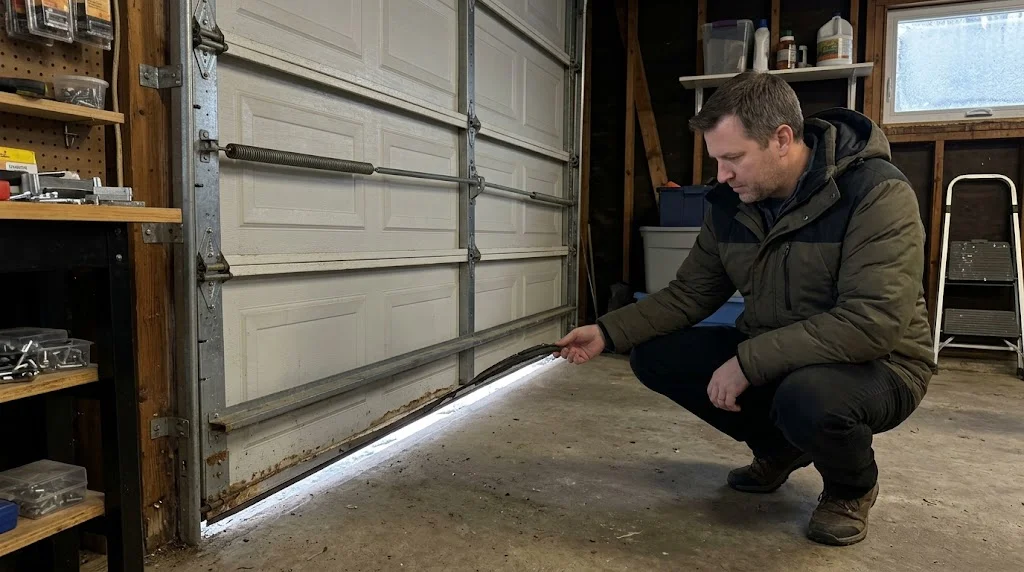
This is one of the least obvious consequences of neglect, since it shows up on a bill weeks later rather than at the door itself.
How Skipping Maintenance Affects a Garage Door’s Insulation Over Time
Weatherstripping and seals degrade with age and temperature swings regardless of how the door is used, but neglect accelerates the process. Cracked or missing seals let conditioned air escape, particularly in an attached garage sharing walls with living space. The effect compounds over a full heating or cooling season, so a gap that seems trivial in September can represent real, measurable dollars by the time winter or summer is over.
- Visible daylight or drafts around the door’s edges
- A garage that feels noticeably colder or hotter than expected for the season
- A steady, hard-to-explain rise in monthly utility costs
- Frost or condensation forming inside the garage during winter
Call a pro if: you notice a real, sustained increase in energy bills without an obvious explanation elsewhere in the home.
For where DIY seal checks fit alongside what a professional visit actually covers, read DIY Garage Door Checks vs. Professional Service: How Often Should You Do Each? 3 Key Differences.
3. Small Issues Turn Into Costly Repairs
This is the most direct financial consequence of skipped maintenance, and often the easiest one for homeowners to underestimate.
Why Delaying Garage Door Maintenance Leads to Bigger Repair Bills
A worn roller left alone eventually damages the track it runs on. A slightly misaligned sensor left unaddressed can eventually mean a full opener diagnostic instead of a simple realignment. What starts as a five-minute fix compounds into hours of labor and multiple replacement parts. Business owners face a similar pattern at scale, covered in How Ontario Businesses Can Reduce Downtime With Preventive Garage Door Maintenance Plans, though the underlying mechanism, small neglected wear becoming an expensive failure, is the same for a home as it is for a commercial garage door.
- A worn roller that eventually damages the track it rides in
- A misaligned sensor that eventually requires a full opener diagnostic
- Loose hardware that eventually leads to a full panel or track replacement
- A minor spring imbalance that eventually strains the opener motor itself
Call a pro if: a minor issue has been present for more than a few weeks without being addressed. Angi’s breakdown of common garage door problems notes that professional repairs for issues like these commonly run from around 250 to 400 dollars, a range that tends to climb sharply once a problem is left long enough to damage additional components.
4. Your Family’s Safety Is at Greater Risk
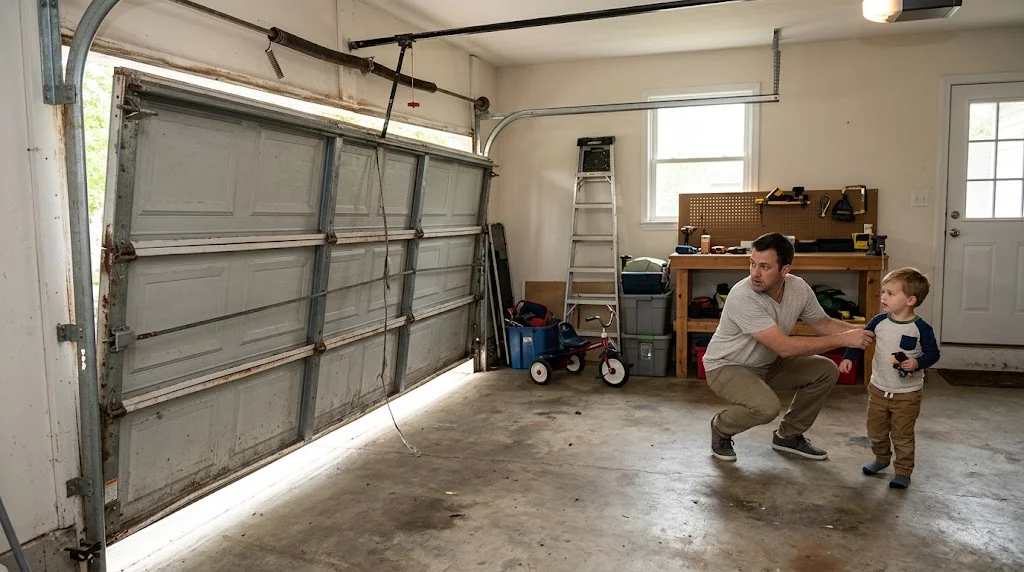
This is the most serious consequence on this list, and the one where neglect carries real physical risk rather than just cost or convenience.
How Skipped Maintenance Increases Garage Door Safety Hazards
Springs and cables are under constant, significant tension, and their failure risk increases the longer they go unchecked. Safety features like auto-reverse sensors are only protective if they’re actually working, and neglect is exactly what allows those systems to quietly stop functioning without anyone noticing until it matters. This is the one category on this list where the cost of being wrong isn’t measured in dollars at all.
- Spring or cable failure without warning during normal use
- A door that doesn’t reverse when it meets an obstruction
- A door that falls suddenly due to worn or failed hardware
- Increased strain on the opener that can lead to sudden, forceful movement
Call a pro if: you notice any spring, cable, or sensor irregularity, and never attempt to inspect or adjust these components yourself. DASMA’s safety guidance for garage door systems specifically warns that worn springs and frayed cables are among the most dangerous parts of a neglected door, and recommends professional inspection and replacement rather than DIY attempts.
The Cost of Waiting Adds Up Faster Than It Seems
None of these four problems require bad luck or an unusual fault; they’re the predictable result of ordinary wear left unaddressed. Individually, they might seem minor, but they tend to compound together: a less secure door, a higher energy bill, a growing repair cost, and rising safety risk, all from the same underlying neglect. At Canadoor Garage Doors, a routine service visit is built to catch all four of these before they become expensive or dangerous. Contact us or give us a call to get ahead of it.
Frequently Asked Questions
Is it really cheaper to maintain a garage door than to wait for something to break?
In almost every case, yes. Routine maintenance catches wear while it's still a minor adjustment, while waiting for failure often means replacing damaged components that a small fix could have prevented, along with any secondary damage the failure caused along the way.
Can skipping maintenance actually be a safety issue, or is it mostly about cost?
It's genuinely both. Worn springs, cables, and malfunctioning safety sensors carry real injury risk, not just inconvenience, and that risk exists independently of whatever the repair might eventually cost.
What's the very first sign that maintenance has been skipped too long?
Unusual noise or a door that hesitates during its cycle are typically the earliest noticeable signs. They're also the easiest and least expensive to address if caught at that stage, before they compound into something more involved.
Does a neglected garage door actually affect home security?
Yes. A door that doesn't close and seal completely leaves an obvious gap in a home's security, regardless of whether the opener and lock otherwise function normally.
If I've already skipped maintenance for a few years, is it too late to catch up?
It's rarely too late, though a longer gap usually means the first service visit involves more findings than a routine annual check would. A full inspection is still worth scheduling as soon as possible rather than continuing to wait.
Will skipping maintenance void my garage door's warranty?
It depends on the manufacturer and the specific warranty terms; some do require documented regular service to remain valid. Checking your warranty paperwork directly is the only way to know for certain, rather than assuming either way.
How much more expensive is an emergency repair compared to routine maintenance?
Emergency repairs typically cost more than a scheduled service visit, partly due to urgency and partly because neglected components have often caused secondary damage by the time they're finally addressed.
Does a neglected garage door affect the resale value of a home?
It can. A door that's clearly worn, noisy, or doesn't operate smoothly is a visible red flag to buyers and inspectors, and may prompt a repair request or price adjustment during a sale negotiation.
What's the single most effective thing I can do to avoid all four of these problems?
Sticking to a consistent professional inspection schedule, supplemented by simple monthly checks, addresses the root cause behind all four problems at once, since they all stem from the same underlying pattern of neglect.