
How Often Should You Lubricate a Garage Door in Winter? A Seasonal Ontario Guide
Lubricate an Ontario garage door every three months, not the six months most guides recommend. The single most important application is in October, before the first hard frost, while temperatures are still mild enough for the lubricant to flow and penetrate. Add a quick mid-winter check in January, a full reset in April once the road salt season ends, and a light top-up in July. Use a garage door specific lubricant or a silicone based product that stays flexible below freezing, never WD-40, and never on the tracks. Four applications a year sounds like a lot until you price a spring replacement in February. Lubrication is the cheapest garage door repair prevention there is, and the parts it protects most are the ones you least want to fail, because garage door spring and cable repair is the job that runs on a fixed cycle life and is never safe to attempt yourself.
Key takeaways
- Three months, not six. The standard six month interval assumes a mild climate. Freeze-thaw cycling and road salt make it too long for Ontario.
- October is the one that counts. Lubricant applied at 10 degrees flows into the bearings. Lubricant applied at minus 15 sits on the surface and does very little.
- WD-40 is not a lubricant for this job. It is a solvent that strips the grease already in place, which leaves the part drier than before you started.
- Never lubricate the tracks. Rollers are meant to roll, not slide, and grease in the channel collects grit and turns it into an abrasive.
- Silicone on the bottom seal stops the door freezing to the slab, which is the most common winter complaint in this province and the easiest one to prevent.
- Cold-thickened grease is read as an obstruction. A door that started reversing partway down in January is often telling you it is overdue rather than broken.
The Ontario lubrication calendar
| When | What | Why this timing |
|---|---|---|
| October | Full lubrication of all moving parts, plus silicone on the bottom seal | Last reliable window with temperatures mild enough for proper penetration |
| January | Quick check and spot application where noise has returned | Catches the parts that dried out or iced up mid season |
| April | Wash off salt residue, then full re-lubrication | Salt brine has been sitting on the hardware since November |
| July | Light top-up, mainly hinges and opener rail | Heat and dust thin and displace what is left |
1. The baseline: every three months, not every six
Most manufacturer guidance says lubricate every six months. In Ontario, three is the right number. The six month figure is written for a temperate climate with no salt exposure and a narrow temperature range, and this province is none of those things.
Three factors compress the interval here. Temperature swings from plus 30 to minus 25 across a year change the viscosity of any lubricant repeatedly. Freeze-thaw cycling drives moisture into bearings and hinges. Road salt, tracked in on a vehicle from November through March, is corrosive and hygroscopic, meaning it pulls moisture in and holds it against the metal.
If four times a year is more than you will realistically do, do two: October and April. Those are the two that carry the most weight.
Call a pro if: parts still bind or squeal after a proper application. Lubrication solves friction, not wear, so persistent noise after greasing means something has already failed.
How often should you lubricate a garage door in Ontario?
Every three months, with October and April as the non negotiable two. This is the interval that fits into the wider service routine described in How Often Should You Get Your Garage Door Serviced? An 8-Point Ontario Maintenance Schedule. For the step by step technique, which parts to reach and in what order, see our existing guide to lubricating a garage door. This post is about when and with what, rather than how.
2. October: the application that actually matters
Do the full lubrication in October, before the first hard frost, ideally on a day above about 10 degrees. If you only do this once a year, do it now, and the reason is chemistry rather than habit.
Lubricant needs to flow to work. Applied at mild temperatures it penetrates into hinge pivots and bearing races and stays there through the cold. Applied at minus 15 it sits on the outside of the part as a film, does not reach the surfaces that need it, and gives you the reassuring smell of having done maintenance without the benefit.
October is also when the bottom seal wants attention. A light silicone application on the rubber astragal keeps it flexible and stops it bonding to the concrete on the first freeze.
Call a pro if: the October check turns up anything beyond friction: a gapped spring, a frayed cable, a roller that will not turn. Winter is the worst possible time to discover those. Related: winter maintenance inspections and how to weatherproof your garage door for winter.
Why should you lubricate a garage door before winter?
Because the lubricant has to be in place before the cold arrives, not applied once problems start. A door going into January with dry hinges meets more resistance in exactly the conditions that expose weakness, and that resistance is what turns a marginal spring or a tired opener into a service call. Prevention here is genuinely cheaper than the alternative, which is the argument made in full in why garage door maintenance is essential.
3. January: the mid-winter check nobody does
Around the halfway point of winter, run the door, listen, and spot treat anything that has started making noise again. This is a five minute job and it is the one that catches problems while they are still small.
You are not repeating the full October service. You are listening for a squeal that has come back, looking at the bottom seal for ice buildup, and checking whether the door has started hesitating on the way down.
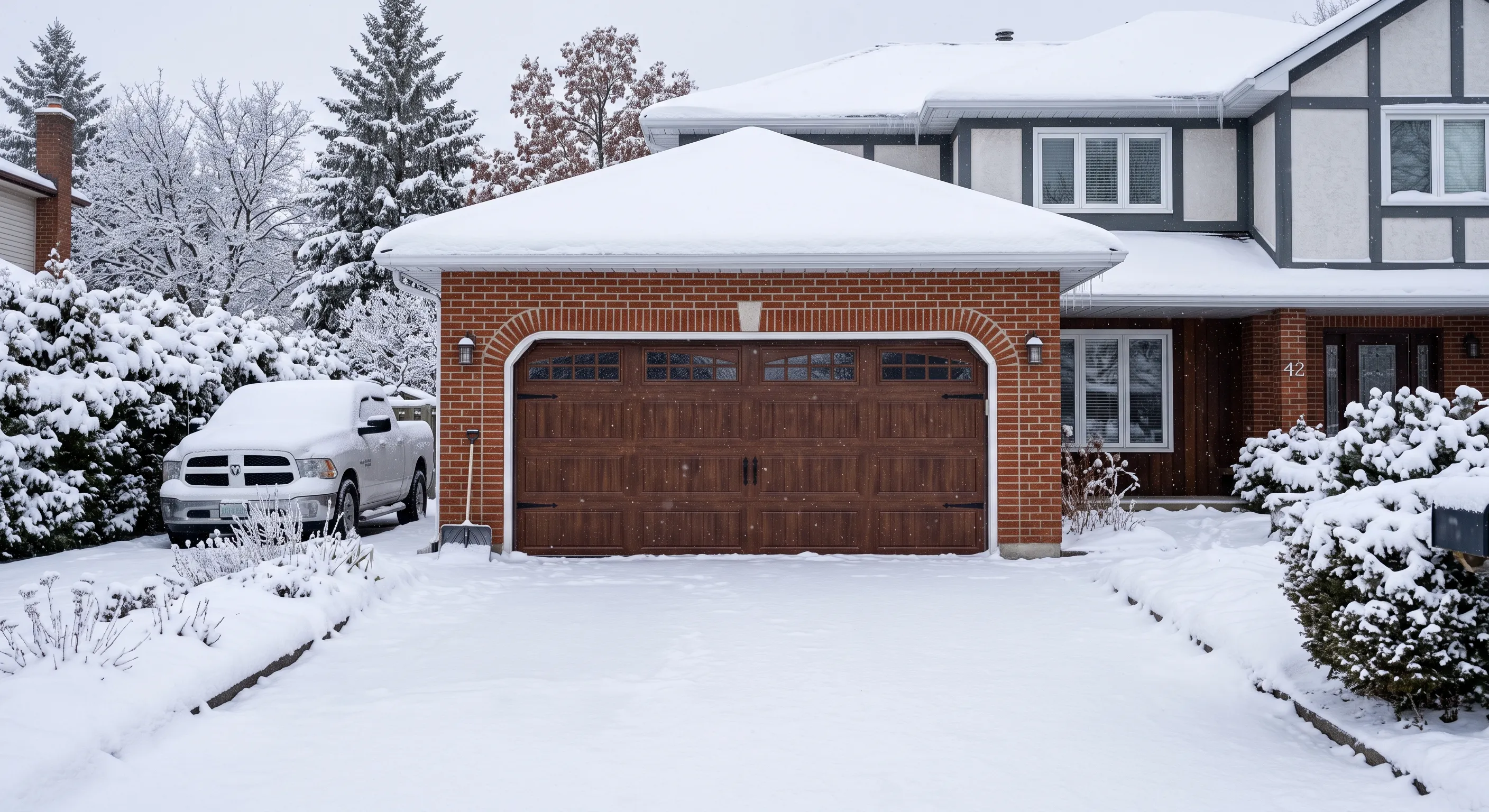
That last symptom deserves attention. Cold-thickened grease adds real resistance across every moving part, and modern openers interpret resistance as an obstruction. A door that reverses partway down in January is frequently overdue for lubrication rather than faulty.
Call a pro if: the door reverses on a clear path after you have lubricated and cleared the threshold. At that point you are looking at the safety system or the opener rather than friction.
Why does my garage door reverse in cold weather?
Because the opener senses the extra resistance from thickened grease, a stiff bottom seal, and contracted metal, and reads it as something in the way. The correct response is lubrication and a seal check. The incorrect and unfortunately common response is turning up the opener’s force setting, which hides the symptom and disables the protection that exists to stop the door on a child or a vehicle. That distinction is covered properly in How Often Should You Test Your Garage Door’s Auto-Reverse? 6 Safety Checks to Do Every Month. See also why your garage door struggles in winter.
4. April: the post-salt reset
Once the salt season ends, wash the hardware and the bottom section before you re-lubricate. Applying fresh grease over salt residue seals the corrosive material against the metal, which is worse than doing nothing.
Rinse the bottom of the door and the lower track area with plain water, let it dry, then lubricate as normal. Pay particular attention to the bottom rollers and the lower hinges, because that is where the brine collects.
Salt is the specific reason roller bearings in an Ontario garage often fall short of their rated life. Brine runs off the vehicle to the lowest point of the floor, which is the threshold, and unsealed bearings wick it straight in.
Call a pro if: you find rust inside a bearing rather than surface rust on a stem. Surface rust is cosmetic. Bearing rust is terminal, and the detail is in How Often Should Garage Door Rollers Be Replaced? 7 Signs Yours Are Worn Out.
Does road salt damage a garage door?
Yes, and it does most of its damage to parts people never look at. The visible effect is rust on the bottom section where the finish has been chipped. The expensive effect is corrosion inside roller bearings, hinge pivots, and the spring coils. A spring that has spent five winters in salt spray reaches the end of its cycle life early, which is why the intervals in how often garage door springs should be replaced shorten in this climate.
5. What gets lubricant, and what must never
Lubricate the hinge pivots, roller bearings and stems, the torsion spring coils, the end and centre bearing plates, and the opener rail if it is a chain or screw drive. Leave everything else alone. The list of exclusions matters more than the list of targets, because the common mistakes here actively cause damage.
Never lubricate the tracks. Rollers roll, and a greased channel collects dust and grit until it works like a fine abrasive. Wipe tracks clean with a dry cloth instead. Grit in the channel also throws the door slightly out of alignment over time, and a door running crooked is one of the quieter routes to garage door panel repair and replacement, because the section edges take the load they were never meant to carry.
Never lubricate the cables. They are wire rope under tension and grease does nothing useful there while making inspection harder.
Never lubricate the belt on a belt drive opener. Chain drives take a light chain lubricant and screw drives take grease on the screw, but a rubber belt needs nothing at all. This is the detail that separates the three drive types on modern garage door openers, and getting it wrong on a belt drive means a slipping belt rather than a quieter one.
Call a pro if: you are unsure which drive type you have, or if previous lubrication has left grease pooled in the tracks. Removing it properly is worth doing before it grinds anything.
What should you not lubricate on a garage door?
Tracks, cables, and the belt on a belt drive opener, in that order of how often people get it wrong. Track lubrication is the single most common mistake and it makes a noisy door noisier within a few months. If your door has become louder after someone greased it, that is very likely the cause, and how to quiet down a noisy garage door covers what to do about it.
6. Which product to use below freezing
Use a garage door specific lubricant or a silicone based product rated for low temperatures. Avoid WD-40 entirely, and be cautious with heavy greases that stiffen in the cold. Product choice matters more in this climate than in most, because a lubricant that thickens at minus 20 becomes part of the problem.
WD-40 deserves the specific warning it gets. It is a water displacing solvent, which means it strips the grease already present. It will quiet a squeal for a few days and leave the joint drier than it was.
White lithium grease is a reasonable general choice and is widely recommended, though the heavier formulations can stiffen noticeably in deep cold. Silicone sprays stay flexible at lower temperatures and are the right product for the rubber bottom seal, where lithium grease should not go.
Call a pro if: the door has been lubricated with the wrong product and is now attracting dirt or running rough. That usually needs cleaning before anything else will help.
| Product | Use on | Cold weather behaviour | Verdict |
| Garage door specific lubricant | Hinges, rollers, springs, bearings | Formulated for the range | Best choice |
| Silicone spray | Bottom seal, weatherstripping, locks | Stays flexible in deep cold | Best for rubber |
| White lithium grease | Hinges, bearings, screw drive | Can stiffen in extreme cold | Acceptable, use lighter formulations |
| WD-40 | Nothing on a garage door | Not applicable | Avoid, it strips existing lubricant |
| Motor oil or household oil | Nothing on a garage door | Runs, drips, collects dust | Avoid |
What is the best garage door lubricant for cold weather?
A product made for the job, which will say so on the can and will list an operating temperature range that goes well below freezing. Silicone based products are the safest default for an Ontario winter and are the only correct choice for the rubber bottom seal. For the application method itself, see the step by step lubrication guide.
What lubrication will not fix
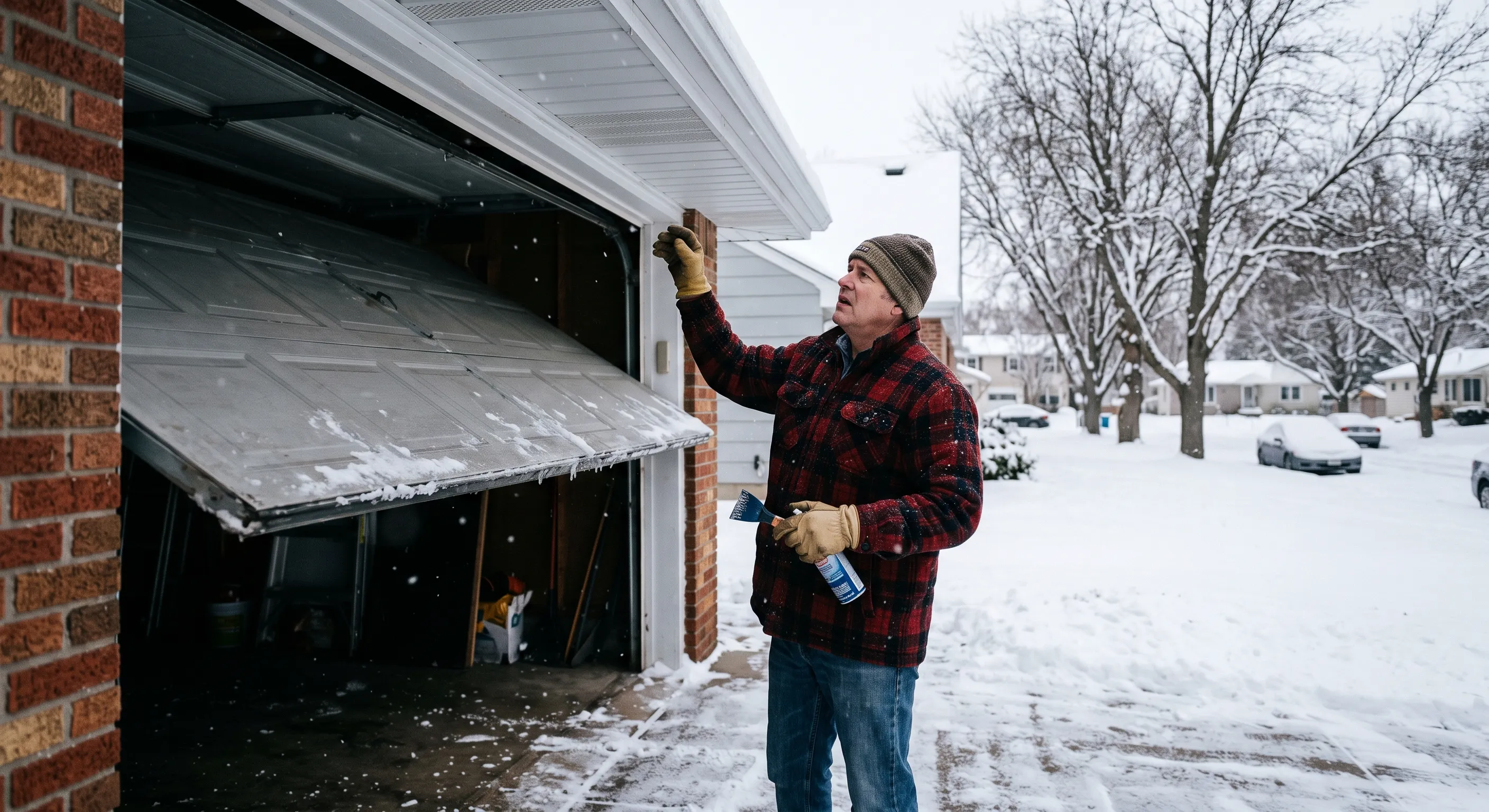
Lubrication solves friction. It does not solve wear, tension, or alignment, and it is worth being clear about the boundary because a lot of money gets spent on the wrong assumption.
A door that is heavy to lift has a spring problem, not a lubrication problem, and spring work is never a homeowner job. See why garage door springs are so dangerous and, when it is time, garage door spring and cable repair.
A door that freezes to the slab needs a seal in good condition and a clear threshold, covered in why your garage door freezes shut in winter and how to prevent your garage door from freezing.
A door that grinds after lubrication has a worn bearing, and grease will not rebuild it.
Canadoor Garage Doors includes a full lubrication and hardware check as part of every service visit, which for most homeowners is the simplest way to make sure the October one actually happens.
Book a pre-winter service, or request a free quote if the door is already struggling. Same day garage door repair is available through the winter.
Related reading: common winter garage door issues, seasonal garage door maintenance tips, and the spring maintenance checklist for Ontario homeowners.
Frequently asked questions
2. Is it too cold to lubricate my garage door in January?
Not pointless, but much less effective than October. In deep cold the product will not flow into the bearing races, so you get a surface film rather than real penetration. Do it anyway if the door is squealing, then plan a proper application on the first mild day.
3. How much should I apply?
Less than most people think. A light, even application on each pivot and bearing is enough, and excess just runs off and collects dust. If it is dripping onto the floor, that is too much.
4. Why does my garage door freeze to the ground?
Almost always the bottom seal rather than the door. Water sits under the seal, freezes, and bonds the rubber to the concrete. Keeping the threshold clear and treating the seal with silicone before winter prevents most of it. See why your garage door freezes shut in winter.
5. My door got louder after I lubricated it. What went wrong?
Nine times out of ten, product in the tracks. Grease in the channel picks up grit and the rollers start grinding through it. Wipe the tracks clean with a dry cloth and leave them dry. The other possibility is that the noise was never friction, in which case you have found out that a bearing is worn. If you want to check what the hardware was designed to tolerate before assuming the worst, DASMA publishes the technical standards that door hardware and track systems are built to.
6. Do nylon rollers with sealed bearings need lubricating?
The bearing itself is sealed and does not, but the stem where it passes through the hinge does, along with the hinge pivot. That is a useful distinction, because people with sealed nylon rollers sometimes skip the hinges entirely on the assumption there is nothing to do. Sealed bearings also hold up far better through a freeze-thaw winter than unsealed ones, and if you want a sense of how many of those cycles your area actually gets in a season, Environment and Climate Change Canada publishes the historical temperature records.
7. Should I lubricate my garage door opener?
Depends on the drive. A chain drive takes a light application on the chain, a screw drive takes grease on the screw, and a belt drive takes nothing on the belt. All three benefit from the rail being clean. See extending the life of your garage door opener and, if it is past helping, garage door openers.
8. Does a brand new garage door need lubricating?
Yes, on the same schedule as any other. Factory hardware arrives with minimal lubrication and the first Ontario winter is as hard on a new door as an old one. Starting the routine in the first year is also the cheapest way to reach the upper end of the lifespans in how long a garage door should last in Ontario.
9. Is lubrication enough, or do I still need a professional service?
Still needed. Lubrication is friction maintenance, and it does not measure spring tension, set opener force and travel limits, check cable condition, or verify the safety reversal systems. Those need someone with a gauge and the training to use it, which is the distinction drawn in garage door technician versus handyman service.
10. How much does a pre-winter service cost?
A standard residential visit sits in the low hundreds of dollars and typically includes lubrication, hardware tightening, a balance check, and safety testing. Set against an emergency call for a broken spring during a cold snap, when both parts and after hours labour are at their most expensive, the economics are not close.